
The pandemic unveiled vulnerabilities in global supply chains, compelling nations and businesses to rethink their operational strategies. As lockdowns and restrictions disrupted logistics and access to raw materials, the repercussions were swift and severe. Industries from automotive to electronics faced production halts, and consumer goods became scarce. Yet, amid chaos, a new narrative of resilience began to emerge.
In the aftermath of these disruptions, countries are pivoting towards a more localized production model. Take the United States, for instance. The Biden administration’s “Build Back Better” agenda emphasizes reshoring critical manufacturing sectors, particularly in semiconductors and pharmaceuticals. The COVID-19 crisis starkly illustrated the risks of over-reliance on foreign suppliers, particularly in Asia. The chip shortage that crippled the automotive industry is a textbook example of how interconnected and fragile these systems can be.
While some critics argue that reshoring could increase production costs and inflation, proponents emphasize the long-term security and sustainability it offers. By investing in domestic production capabilities, nations can not only bolster their economies but also mitigate risks associated with geopolitical tensions. The U.S. has already earmarked $52 billion for semiconductor manufacturing, aiming to reduce its dependence on Taiwanese suppliers.
On the other side of the world, Germany’s approach is somewhat different yet equally pragmatic. Rather than a wholesale retreat from globalization, German policymakers are advocating for a “de-risking” strategy. This involves diversifying supply sources and investing in relationships with countries that can ensure steady access to raw materials. The reliance on China remains significant, but as recent events have shown, Germany is actively seeking alternatives in Southeast Asia and Africa.
Meanwhile, the rise of digital technologies is transforming the logistics landscape. Companies like Amazon and Alibaba have leveraged advanced analytics and artificial intelligence to optimize their supply chains. These innovations not only enhance efficiency but also provide real-time insights that allow businesses to quickly adapt to disruptions. The shift to digital isn’t merely a response to the pandemic; it’s a sustainable path forward that can offer greater flexibility and responsiveness.
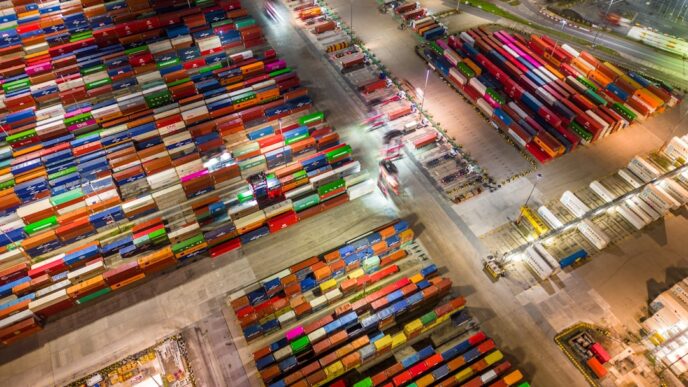
The shipping industry is also undergoing significant changes. The congestion at ports, a byproduct of pandemic-related delays, has prompted a reevaluation of global shipping practices. Major shipping companies are investing in automated ports and smart containers that use IoT technology to provide status updates. This shift towards automation is expected to streamline operations, reduce costs, and ultimately increase supply chain resilience.
However, sustainability cannot be an afterthought. Environmental concerns are becoming increasingly intertwined with supply chain strategies. The European Union’s Green Deal aims to make Europe climate-neutral by 2050, pushing companies to incorporate sustainability into their logistics models. This initiative presents both challenges and opportunities as firms grapple with compliance costs while innovating greener practices.
As nations and companies recalibrate their supply chains, the lessons learned from the pandemic will continue to shape trade policies and operational strategies. While uncertainty remains a constant, the drive towards resilience—whether through reshoring, de-risking, technological innovation, or sustainability—signals a transformative phase in how global trade will function moving forward. The future may be far from predictable, but the steps taken today could build a more robust economic framework for tomorrow.