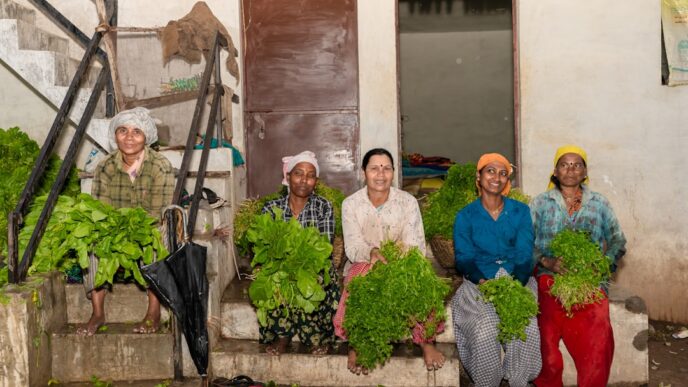

In the heart of rural Kenya, a quiet revolution is taking place. Smallholder farmers, often marginalized and excluded from traditional financial systems, are leveraging blockchain technology to enhance their economic prospects. This transformation is not just a technological shift; it represents a fundamental change in the way agricultural transactions are conducted, building trust and transparency where it was previously lacking.
The typical challenges faced by small farmers are well-known: lack of access to credit, volatility in pricing, and the inefficiencies of middlemen who often take a hefty portion of the profit. Enter the blockchain. Organizations like Twiga Foods are pioneering the use of this technology to create a decentralized market that empowers farmers to connect directly with consumers and retailers. By recording transactions on an immutable ledger, they ensure that every sale is transparent, reducing the potential for fraud and allowing farmers to receive fair prices for their goods.
Consider the case of a farmer named Amani. Before adopting blockchain solutions, Amani sold his produce through intermediaries who dictated the prices, often leaving him with a fraction of the profit. Now, through a blockchain platform, he can sell directly to consumers, receiving real-time updates on market prices and demand. This shift not only increases his income but also fosters a sense of community among local producers as they collectively benefit from a fairer trading system.
The scalability of blockchain technology is particularly appealing in Africa, where mobile penetration is high but traditional banking infrastructure remains limited. According to the World Bank, only about 30% of adults in Sub-Saharan Africa have access to formal financial services. However, with mobile wallets and blockchain applications, farmers can access credit and financial services without needing a bank account. This opens the door for microloans and investments that were previously unattainable.
But the impacts of this shift extend beyond just individual farmers. A more decentralized and transparent agricultural economy can lead to improved food security in the region. With farmers able to better gauge demand and connect with local markets, there is potential for reduced food wastage and improved distribution channels. This shift is particularly crucial as climate change poses increasing threats to agriculture, and resilient, localized food systems may become essential for survival.
Yet, not all that glitters is gold. There are hurdles to overcome, including digital literacy and infrastructure challenges. While blockchain promises efficiency, the tools and platforms must be accessible to ensure that farmers like Amani can take full advantage of this technology. Organizations investing in education and training will be vital in ensuring that these farmers are not left behind.
As blockchain continues to evolve, its potential to democratize economic opportunities in emerging markets is becoming clearer. The localized economies of Africa are on the brink of a transformation that could ripple through various sectors, improving livelihoods and fostering sustainable practices.
This narrative is not merely about technology; it is about empowerment, community, and a brighter future for millions. As Amani tends to his crops, he embodies the hopes of a generation seeking to redefine their economic destiny through innovative, decentralized solutions. The complexities of the global supply chain may still loom large, but with every blockchain transaction, the power shifts closer to those who toil the land.