The European Union has embarked on an ambitious journey towards establishing circular economies across its member states, a trend that is reshaping the economic landscape. This movement seeks to redefine growth by promoting resource efficiency and sustainability, moving away from the traditional linear model of “take, make, dispose.”
In 2020, the European Commission introduced the Circular Economy Action Plan, part of the broader European Green Deal. The plan aims to ensure that resources are used sustainably, with an emphasis on reducing waste, extending the lifespan of products, and encouraging reuse and recycling. This is more than a mere regulatory initiative; it is economically transformative. The EU estimates that transitioning to a circular economy could generate an additional €1.8 trillion in economic output by 2030, creating hundreds of thousands of jobs along the way.
Countries like Finland and the Netherlands have emerged as frontrunners in this transition. Finland’s roadmap emphasizes sustainable design practices, while the Netherlands has targeted a fully circular economy by 2050, even establishing a dedicated government team to guide policy and innovation in this area. For instance, the Dutch startup Fairphone has gained recognition for creating modular smartphones that are easier to repair and recycle, exemplifying the principles of circularity.
However, the journey is not without obstacles. The transition often requires significant investments in new technologies and infrastructure, which can be daunting for smaller businesses. Moreover, there is the challenge of changing consumer behavior. Many people remain entrenched in a culture of disposability, making it hard to shift towards more sustainable consumption patterns. The EU has recognized this and is launching awareness campaigns to educate citizens on the benefits of circularity.
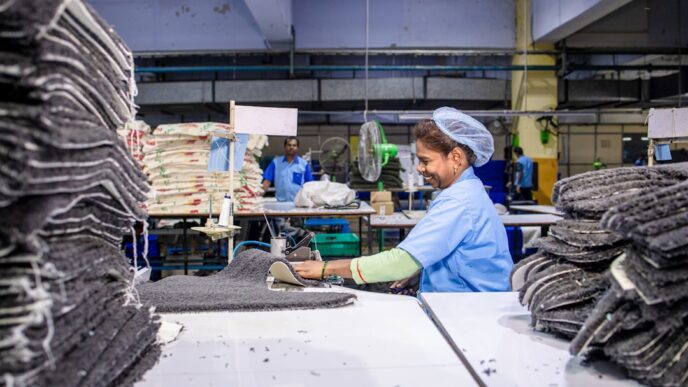
One particularly interesting case is that of the fashion industry. Fast fashion has been a significant contributor to environmental degradation, prompting European policymakers to propose stricter regulations. The EU is considering new laws that would require companies to adhere to circular principles, such as ensuring that clothing is designed for longevity and recyclability. This regulatory push has already stirred up innovation within the sector, with brands like H&M and Zara investing in sustainable materials and recycling programs to comply with emerging standards.
On the financial front, the circular economy opens up new avenues for investment. Green bonds and sustainability-linked loans are becoming increasingly popular among investors looking to align their portfolios with ethical standards. The Circular Economy Fund, launched by the European Investment Bank, aims to finance projects that support circular initiatives, indicating a growing recognition of the long-term profitability linked to sustainable practices.
Yet, while the EU may be leading the charge, the concept of circularity is gaining traction worldwide. Countries in Asia and South America are looking to adopt similar principles tailored to their local contexts. For instance, Brazil’s National Solid Waste Policy emphasizes recycling and waste segregation, aligning with circular economy principles.
The shift towards circular economies reflects a broader recognition that economic health cannot be divorced from environmental well-being. As the world grapples with the impacts of climate change and resource depletion, the EU’s pioneering efforts may serve as a blueprint for other regions. It highlights that sustainability is not just a moral imperative; it is rapidly becoming a competitive advantage in the global marketplace.