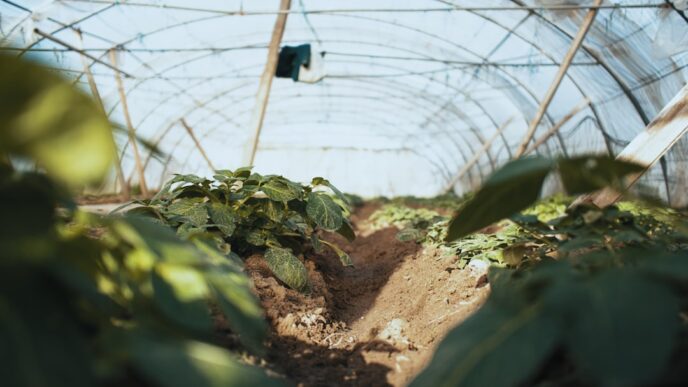

The agricultural sector has long been seen as a bastion of traditional practices, but that perception is rapidly changing. Agri-tech startups are emerging as powerful disruptors, reshaping the landscape of farming with innovative technologies that address pressing global challenges. One of the most notable examples comes from Israel, where companies like CropX are revolutionizing water management through advanced soil sensing technology.
CropX’s platform provides farmers with real-time data on soil conditions, enabling them to optimize water usage and improve crop yields. This is not just an incremental improvement; it represents a paradigm shift in how farming is approached, particularly in water-scarce regions. In a country where agriculture accounts for only 2% of GDP yet employs 3% of the workforce, the implications of such advancements are profound. As water resources dwindle, efficient management becomes not just economically sensible but also a societal necessity.
Let’s pivot to Africa, where a different but equally compelling agri-tech innovation is taking root. The company Twiga Foods, based in Kenya, is redefining the supply chain for food distribution. By leveraging mobile technology, Twiga connects farmers directly with vendors, cutting out middlemen and ensuring that farmers receive fair prices for their produce. This model not only enhances the economic viability of farming but also contributes to food security in regions where malnutrition is a persistent issue.
The importance of technology in agriculture transcends mere operational efficiency. It also plays a critical role in addressing climate change. For instance, companies like Indigo Agriculture are developing microbial seed treatments that can help crops withstand environmental stressors such as drought or disease. This approach is not just about enhancing productivity; it’s about creating resilience in food systems that are increasingly vulnerable to climate extremes.
The rise of agri-tech has not gone unnoticed by investors. Venture capital is flooding into this sector, with reports indicating that investments in agri-tech surged by over 60% in 2021 alone. Firms like The Venture Reality Fund and AgFunder are actively scouting for the next big idea that could transform the way food is grown and distributed. This influx of capital is vital for scaling solutions that can be deployed in emerging markets, where the challenges of food production are most acute.
However, the path forward is fraught with challenges. Regulatory frameworks in many countries lag behind technological advancements, creating hurdles for startups. For instance, in India, despite the enthusiasm for agri-tech, the lack of a coherent digital infrastructure hampers farmers’ ability to access these innovations fully. Policymakers will need to adapt to the realities of a tech-driven agricultural landscape to foster growth rather than stifle it.
Moreover, there’s a critical need for education and training as traditional farmers may struggle to integrate new technologies into their practices. Partnerships between agri-tech startups and educational institutions can help bridge this gap, ensuring that innovations translate into sustainable practices on the ground.
As agri-tech continues to burgeon, it is essential to recognize its potential not only in enhancing productivity but also in addressing the broader issues of sustainability and food security. From Israel to Kenya and beyond, these innovations are laying the groundwork for a more resilient agricultural future, one where technology and tradition can coexist harmoniously. The question remains: will policymakers and investors seize this moment to ensure that agri-tech fulfills its promise for all?