Artificial intelligence has quietly woven itself into the fabric of various industries, transforming how businesses operate and fundamentally altering labor market dynamics. As AI systems grow more sophisticated, their influence is felt most prominently in advanced economies like those of the United States and Germany, where productivity gains can now be attributed to algorithm-driven efficiencies.
Consider the manufacturing sector, where companies like Siemens are deploying AI to optimize production lines. This shift does not merely streamline operations; it also has profound implications for employment patterns. Traditional roles are rapidly being displaced by machines, while simultaneously new opportunities emerge, requiring a different skill set. The paradox of job creation and destruction is becoming a defining feature of the contemporary labor landscape.
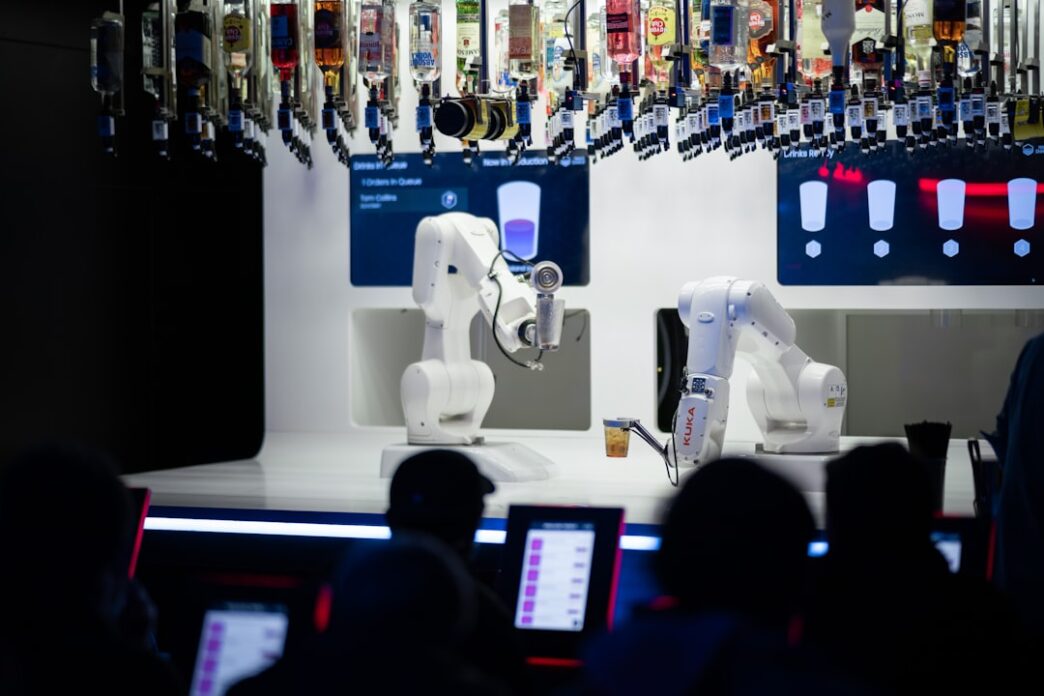
In the hospitality industry, AI-powered chatbots streamline customer service, while automated systems handle inventory management and logistics. The Hilton Group has been at the forefront of this transformation, employing AI to enhance the guest experience. Yet, as these technologies proliferate, low-skill jobs face an existential threat. A report from the McKinsey Global Institute suggests that by 2030, up to 25% of the U.S. workforce could be displaced due to automation unless proactive measures are taken.
Governments are beginning to respond to this potential upheaval. In Germany, policymakers are exploring frameworks for lifelong learning and upskilling initiatives aimed at helping workers transition into more technologically advanced roles. The country’s strategy includes collaborating with educational institutions and industries to create curricula that align with future job demands. While such efforts are commendable, the pace of technological change raises questions regarding the adequacy of these measures.
In the financial sector, firms like JPMorgan Chase are leveraging AI for predictive analytics and risk management. While these innovations drive efficiency and profitability, they also provoke concerns about job polarization. Highly skilled workers may benefit from AI’s advancements, but those in low-skill positions could find themselves increasingly marginalized. The challenge lies in ensuring that the benefits of AI are equitably distributed across the workforce.
Economic policy must evolve to address these disparities. One proposal gaining traction is the implementation of a universal basic income (UBI) as a buffer against job displacement. Advocates argue that UBI could provide a safety net, allowing individuals more freedom to pursue education or entrepreneurial endeavors without the immediate pressure of financial insecurity. However, critics raise concerns over long-term sustainability and potential disincentives to work.
To truly grasp the implications of AI on the labor market, it is essential to look beyond mere statistics. Real-world examples illustrate that while innovation can lead to increased productivity, it can also exacerbate existing inequalities. Workers without access to training or education may find themselves stuck in a cycle of low-paying jobs, further widening the gap between high and low-income earners.
What does this mean for the future? As advanced economies continue to integrate AI, a multi-faceted approach is necessary. This includes rethinking educational priorities, fostering collaboration between the public and private sectors, and perhaps most critically, addressing the ethical implications of automation. The challenge lies not in halting progress, but in ensuring that progress serves all members of society equitably. The path forward will require a concerted effort to redefine work and the value of human contribution in an age increasingly dominated by artificial intelligence.