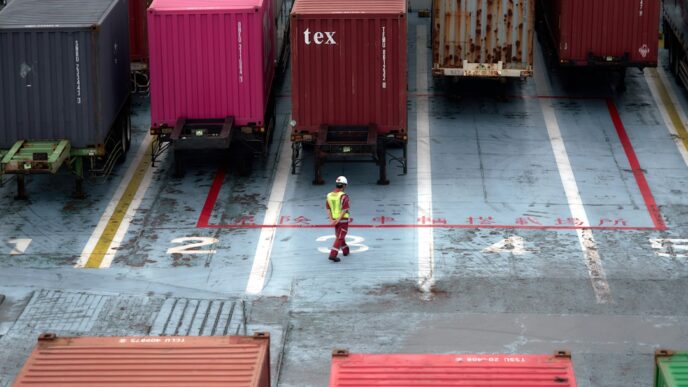
Tariffs, essentially taxes on imported goods, directly affect both consumers and businesses within a country. When a government raises tariffs, the immediate effect is typically an increase in the cost of imported products. This often leads to higher prices for consumers on various goods, particularly those that are not produced domestically or whose domestic production cannot meet demand.
For example, consider the tariffs imposed by the United States on Chinese goods during the trade war that escalated in 2018. Many electronics, clothing, and household items saw price increases. Retailers might face higher costs for imported items and, without absorbing these costs themselves, they often pass them on to consumers. As a result, shoppers may find themselves paying more at the register, which can lead to decreased consumer spending if people start to prioritize necessities over luxuries.
On the flip side, while tariffs aim to protect domestic industries by making foreign products less competitive, they can also lead to unintended consequences for local businesses. Increased costs for imported materials can squeeze profit margins for manufacturers reliant on these goods. For instance, American manufacturers that rely on steel or aluminum imports experienced rising costs due to tariffs, which in some cases prompted them to raise their own prices or even cut back on production.
The impact of tariffs is not uniform across all consumers or businesses. Lower-income households often feel the impact more acutely because a larger portion of their income goes toward purchasing essential goods, which are often subject to tariffs. In this way, tariffs can inadvertently exacerbate economic inequality by placing a heavier burden on those who are less financially secure.
Additionally, businesses that export to countries imposing retaliatory tariffs may find their products less attractive abroad. For example, U.S. farmers faced significant challenges when China retaliated against American tariffs by imposing their own on agricultural products like soybeans and pork. This not only affected farmers’ income but also disrupted supply chains and market dynamics.
Ultimately, while the intention behind imposing tariffs is to support local industries, the broader economic implications can be complex and multifaceted. Understanding these nuances is crucial for policymakers, businesses, and consumers alike as they navigate an increasingly interconnected global economy. Balancing the interests of protecting domestic production with the need to maintain affordable prices for consumers is an ongoing challenge.