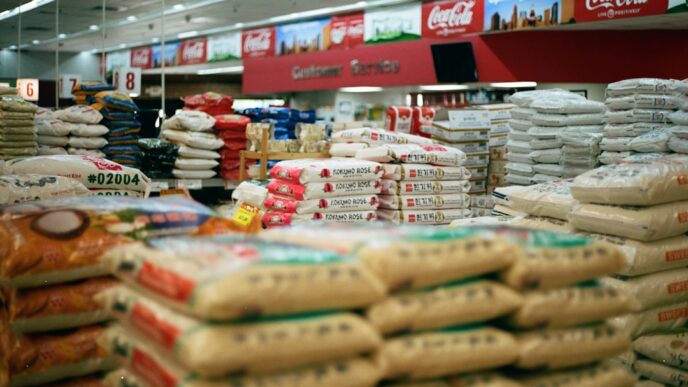

When a country increases tariffs on imported goods, it typically leads to higher consumer prices. Tariffs act as a tax on imports, making foreign products more expensive. As import costs rise, domestic producers may also raise their prices in response, leading to a direct impact on what consumers pay at the store.
For instance, in 2018, the United States imposed tariffs on a range of products from China, including electronics and steel. This action not only increased the cost of those imported items but also prompted U.S. manufacturers to adjust their pricing strategies. Consequently, consumers faced higher prices for many products, from washing machines to bicycles. As a result, inflation rates saw a noticeable uptick, reflecting the rising costs passed down to consumers.
The relationship between tariffs and consumer prices can be broken down into a few key points:
– **Cost-Push Inflation:** When tariffs increase the cost of goods, manufacturers may pass those costs onto consumers. This phenomenon is known as cost-push inflation. Higher prices can lead to reduced consumer spending, impacting overall economic growth.
– **Supply Chain Effects:** Tariffs can disrupt existing supply chains. For example, if a company relies on imported components that are now subject to tariffs, it may choose to source materials domestically at a higher price, further fueling inflation.
– **Market Reactions:** Markets often react to tariff announcements before they take effect. Anticipation of price increases can lead to panic buying, which may temporarily spike demand and prices even before the tariffs are implemented.
In addition to immediate price increases, tariffs can lead to longer-term changes in consumer behavior. People may start to look for cheaper alternatives, potentially affecting the demand for imported goods. For example, if a specific brand becomes too costly due to tariffs, consumers might turn to local brands or different product categories, shifting market dynamics.
Moreover, the effects of tariffs are not uniform across all sectors. Some industries might benefit from reduced competition, while others that rely heavily on imports might struggle. A 2020 study from the National Bureau of Economic Research indicated that the tariffs imposed during the U.S.-China trade war could lead to an additional $1,000 in annual costs for the average American household.
Ultimately, while tariffs can be used as tools for protecting domestic industries, they often come with the price of higher consumer goods. The balance between protecting local jobs and managing consumer prices is a delicate one, and policymakers must carefully consider the broader economic implications of such measures.